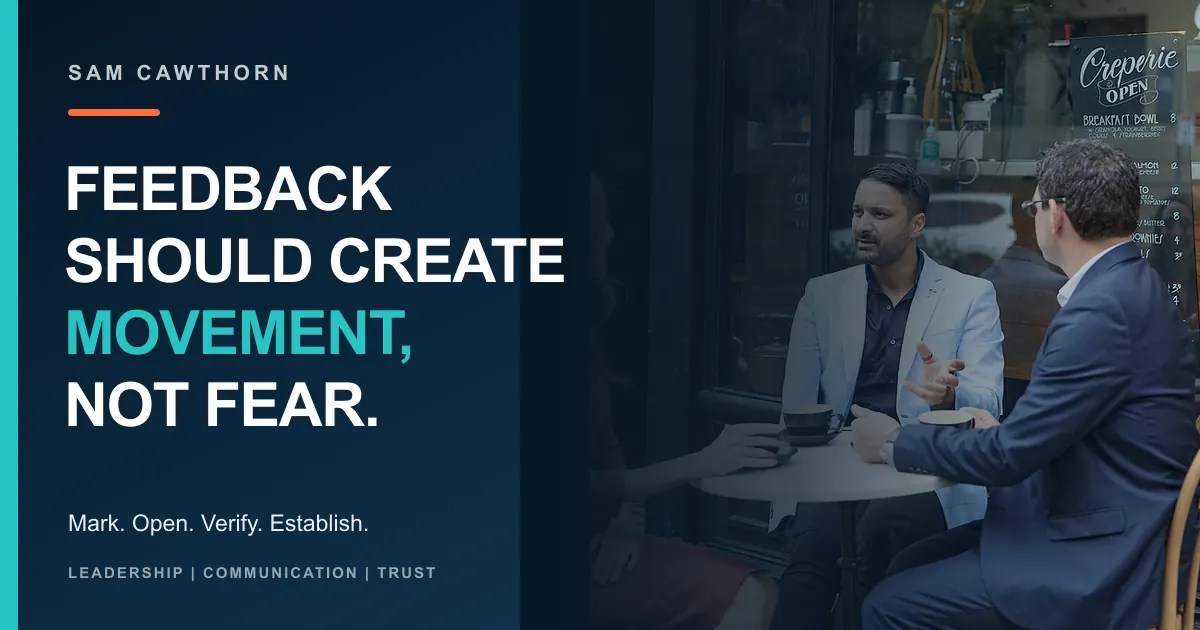
Feedback should create movement, not fear.
Yet too many feedback conversations leave people with one of two reactions. They become defensive because they feel judged, or they leave confused because the message was softened until nothing useful remained.
Neither outcome helps.
The purpose of feedback is not to prove that the leader noticed a problem. It is to help another person see something clearly enough to improve it.
That takes courage. It also takes care.
At this time of year, many leaders are preparing performance reviews, planning conversations and end-of-year reflections. The temptation is to save everything up for one formal meeting. Then months of observations arrive in one heavy conversation.
Useful feedback works differently. It is specific, timely, human and connected to a next step.
People Follow People means leadership is always relational. A title may give you the right to assess performance. Trust determines whether your words can be heard, understood and used.
If you want feedback to lead to action, use a simple four-part framework: MOVE.
1. Mark the moment
Start with the observable moment, not your verdict about the person.
There is a big difference between these two statements:
"You are not a good communicator."
"In Monday's client meeting, the recommendation changed three times and the client asked which option we were actually proposing."
The first statement attacks identity. The second gives the conversation somewhere real to begin.
Describe what was said, done, missed or delivered. Name the meeting, the deadline, the behaviour or the result. Keep your language clean. Avoid words such as always, never, careless, lazy or difficult unless you can point to clear evidence and the label is genuinely necessary.
Storyshowing matters here. Do not tell somebody they created confusion. Show them the moment confusion became visible.
Specificity reduces the space for argument. It also helps the other person understand that you are responding to evidence, not mood.
Before giving feedback, ask yourself:
- What exactly happened?
- What did I personally observe?
- What part is fact, and what part is my interpretation?
If you cannot answer those questions, you may not be ready for the conversation.
2. Open the impact
A behaviour becomes meaningful when people can see its impact.
Do not assume the other person understands why the moment mattered. Explain the effect on the customer, the team, the decision, the deadline or the standard you are responsible for protecting.
You might say:
"When the recommendation changed, the client became uncertain about the decision we wanted them to make. We lost clarity at the point where they needed it most."
This is not about making the problem sound bigger. It is about connecting behaviour to consequence.
Strong feedback answers the question, "Why does this matter?"
It may matter because trust was weakened. It may matter because another person had to redo work. It may matter because an opportunity was missed. It may also matter because the person has more capability than the performance they showed in that moment.
That last point matters. Feedback should not only identify what went wrong. It should communicate that improvement is possible and worth the effort.
Be honest without becoming dramatic. If the impact was small, say so. If it was serious, do not hide behind vague language.
Clarity is respectful.
3. Verify their perspective
Feedback is a conversation, not a verdict.
Once you have marked the moment and opened the impact, ask for the other person's view.
"How did you see it?"
"What was happening for you in that moment?"
"Is there context I may be missing?"
Then listen.
You may learn that the person had different information. You may discover a broken process, an unclear instruction or a pressure you did not see. You may also confirm that the person made a poor call.
Listening does not mean removing accountability. It means making sure accountability is based on the fullest responsible picture available.
This is where many leaders lose trust. They ask for a perspective, but their tone says the decision has already been made. The question becomes theatre.
If you ask, be prepared to hear something that changes your view.
You can still hold a clear standard. You can say, "I understand why you made that choice, and we still need a different approach next time."
People are more likely to engage with feedback when they are treated as participants in the solution, not objects of the assessment.
4. Establish the next move
Feedback without a next move becomes emotional admin.
Do not finish with, "Just be more confident," "Communicate better" or "Lift your game."
Those statements create pressure without direction.
Agree on one observable action.
For the client-meeting example, the next move might be:
"Before the next meeting, write the single recommendation at the top of the brief. If alternatives need to be discussed, explain how each one relates to that recommendation. Send me the brief the day before and we will pressure-test it together."
Now the person knows what better looks like.
A useful next move should answer four questions:
- What needs to change?
- What will the person do?
- What support is available?
- When will you review progress?
The follow-up matters. If a leader gives feedback and never notices the improvement, the person learns that the conversation was about correction, not growth.
When the behaviour changes, say so.
"Your recommendation was clear today. The client understood the decision and the discussion stayed focused. Keep doing that."
Positive feedback should be specific too. "Good job" feels pleasant. Specific recognition teaches people what to repeat.
Do not wait for the annual review
The annual review should not contain a surprise collection of frustrations.
If something matters, address it close enough to the moment for the person to learn from it. If the issue is sensitive, choose the right setting. If emotions are high, create enough space to speak responsibly. But do not confuse delay with kindness.
Silence often makes the eventual conversation harder.
Regular feedback also makes positive recognition more credible. When leaders notice progress, name strengths and address problems early, the formal review becomes a summary of an ongoing relationship rather than a courtroom scene.
The goal is not constant criticism. The goal is a culture where useful truth can move in both directions.
Leaders should be able to give feedback. They should also be able to receive it without punishing the person who spoke.
That is one of the clearest tests of People Follow People. Do your actions tell people that honesty is safe, growth is expected and nobody is above learning?
Make the conversation useful
Before your next feedback conversation, remember MOVE:
Mark the moment: Describe the specific behaviour or result.
Open the impact: Explain why it mattered.
Verify their perspective: Ask, listen and test your interpretation.
Establish the next move: Agree on one observable action, support and follow-up.
Feedback does not need to feel comfortable to be respectful.
It needs to be clear enough to use, human enough to hear and practical enough to act on.
Do not use feedback to unload your frustration.
Use it to help someone move.
That is leadership.
Giving useful feedback FAQs
How do you give feedback without making someone defensive?
Begin with the specific moment or behaviour you observed, explain its impact and ask for the other person's perspective before agreeing on a next step. Keep identity labels and exaggerated language out of the conversation.
What is the MOVE feedback framework?
MOVE means Mark the moment, Open the impact, Verify their perspective and Establish the next move. It turns feedback into a clear, two-way conversation with an observable action.
When should a leader give feedback?
Give feedback close enough to the event for the person to learn from it, while choosing a responsible setting and allowing high emotions to settle when necessary. Do not save important issues as surprises for an annual review.
How should a feedback conversation end?
Agree on what needs to change, what the person will do, what support is available and when progress will be reviewed. Notice and name improvement when it happens.