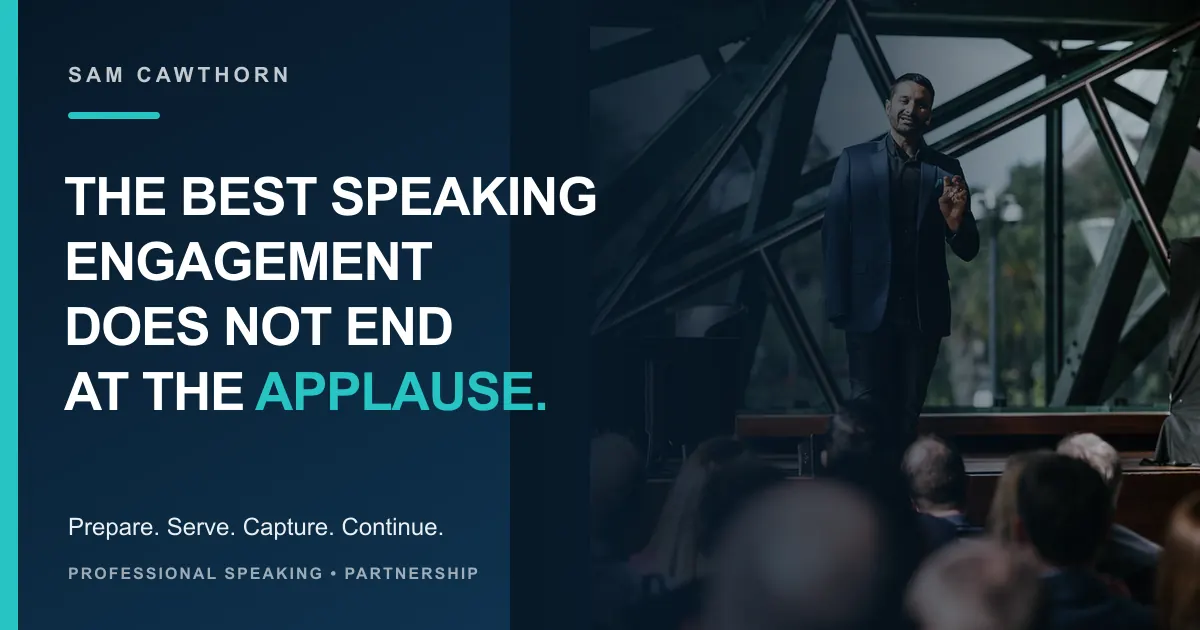
The applause is not the finish line.
For many speakers, the engagement is treated like a transaction. Agree on the date. Prepare the talk. Deliver the keynote. Send the invoice. Move on.
That can produce a good event. It does not always produce lasting value.
The strongest speaking relationships begin when both the speaker and the client stop asking, "How do we fill this hour?" and start asking, "What needs to be different after this hour?"
A keynote is one moment inside a much bigger story. The audience arrives with pressure, habits, language, priorities and expectations. They leave and return to real work. If the message is going to matter, it needs to connect those two worlds.
This is where Storyshowing and People Follow People come together. A speaker must make an idea visible, but the relationship grows through trust, relevance and follow-through.
You do not build that relationship by forcing another sale at the end of the event. You build it by becoming useful before, during and after the room is full.
Use four stages: Prepare, Serve, Capture and Continue.
1. Prepare for the outcome, not only the presentation
Great preparation starts before you open your slide deck.
Ask the client what is happening around the event. What challenge is the audience facing? What language does the organisation already use? What should people understand, feel or do differently after the session?
Do not settle for a broad answer such as "We want them to feel inspired."
Inspiration matters, but it needs somewhere to go.
Ask questions such as:
- What conversation does this event need to start?
- What behaviour would show that the message landed?
- What should leaders reinforce after the event?
- What must I understand about this audience before I speak to them?
These questions change the work. You stop delivering a generic talk with the client's logo on the first slide. You start shaping a relevant experience around a real outcome.
Preparation is also where trust begins. Be clear about timing, technology, audience participation, boundaries and what you need from the client. Confirm the next step. Meet the deadline. Make it easy for the event team to work with you.
Professionalism is part of the message before you ever reach the stage.
2. Serve the room you are actually in
The keynote should not feel like a performance delivered at people. It should feel like a useful conversation built with them.
That does not mean changing your core message every time the room moves. It means connecting the message to the people in front of you.
Use the examples, tensions and language you learned during preparation. Read the room. Ask a real question. Give people a practical way to test the idea while they are still with you.
A strong session should create three things:
Recognition: People can see themselves in the message.
Relevance: They understand why the idea matters in their work or life.
Response: They know one action they can take next.
This is the heart of Storyshowing. The speaker's story is not there to prove how impressive the speaker is. It is there to help the audience recognise possibility, make meaning and move.
Do not overload the room with ten frameworks because you want to demonstrate value. Give people a clear idea they can remember and use.
The client is not measuring how much information you can fit into the hour. They are watching what the audience can carry out of it.
3. Capture evidence, questions and language
Every engagement gives you information that can make the next step more useful.
Listen to the questions people ask. Notice which idea creates energy. Pay attention to where the audience becomes uncertain. Ask the client what landed and what needs more support.
This is not about chasing praise. It is about learning.
With appropriate permission, you may also capture event photographs, audience feedback or a short client reflection. Permission matters. Context matters. Never turn a private client experience into public marketing material without clear approval.
The most valuable evidence is often practical:
- the question that appeared three times after the keynote
- the phrase leaders began repeating
- the action the client wants the team to practise
- the gap that could not be solved in one session
Those signals help you understand whether the audience needs a resource, a workshop, a leadership conversation or simply time to apply what they have already received.
Capture the truth of the engagement, not a story you hope to sell later.
4. Continue with relevance
Follow-up is where many speakers become either invisible or irritating.
One group disappears as soon as the event ends. The other sends a generic message asking for more work before the client has had time to breathe.
There is a better approach.
Follow up with something useful and connected to the agreed outcome.
You might send a concise summary of the core idea, a practical worksheet, answers to questions that could not be covered in the session or one recommendation for helping leaders reinforce the message.
Then ask a good question:
"What are you hearing from the team now that they are back at work?"
"Which part of the message needs reinforcement?"
"What would help people turn the idea into a consistent behaviour?"
These questions keep the focus on the client, not your calendar.
If there is a genuine next step, make it clear. A workshop may help people practise the skill. A facilitated conversation may help leaders translate the message. A resource may be enough.
Do not manufacture a problem to create a sale. Do not recommend a larger solution when the client only needs a simple follow-up.
Long-term partnerships are built when the next step fits the need.
Make the engagement easy to continue
Before the event, agree on how success will be discussed. After the event, close the loop.
Use this four-part check:
Prepare: Do I understand the audience, the context and the outcome?
Serve: Did I make the message relevant, memorable and usable in the room?
Capture: What questions, evidence and language should inform the next step?
Continue: What useful follow-up fits the client's real need?
This approach does not guarantee another booking. That is not the point.
The point is to create value with integrity.
Some engagements will end after one keynote. Others will become workshops, leadership programs, repeat events or ongoing conversations. You cannot control every outcome, but you can control whether the client experiences you as prepared, relevant and reliable.
People follow people they trust.
They remember speakers who understand the room, serve the outcome and keep their word after the applause has stopped.
Do not ask only, "How did the keynote go?"
Ask, "What can people do now that they could not do before?"
That is how one speaking engagement becomes more than a moment. It becomes the beginning of meaningful change and, when the need is real, a partnership worth continuing.
Speaking engagement partnership FAQs
How can a speaker turn one engagement into a long-term client relationship?
Prepare around the client outcome, serve the room with relevant content, capture useful questions and evidence, then follow up with a practical next step that fits the client's real need.
What should a speaker ask before a keynote?
Ask what conversation the event needs to start, what behaviour would show the message landed, what leaders should reinforce and what context you need to understand about the audience.
What should a speaker send after an event?
Send something concise and useful, such as a summary, worksheet, answers to unanswered questions or one recommendation that helps the client reinforce the agreed outcome.
How should speakers use event photos and feedback?
Use photographs, audience feedback or client reflections only with appropriate permission and context. Capture the truth of the engagement rather than turning private client material into unapproved marketing.